Furnace repair: what to check before calling
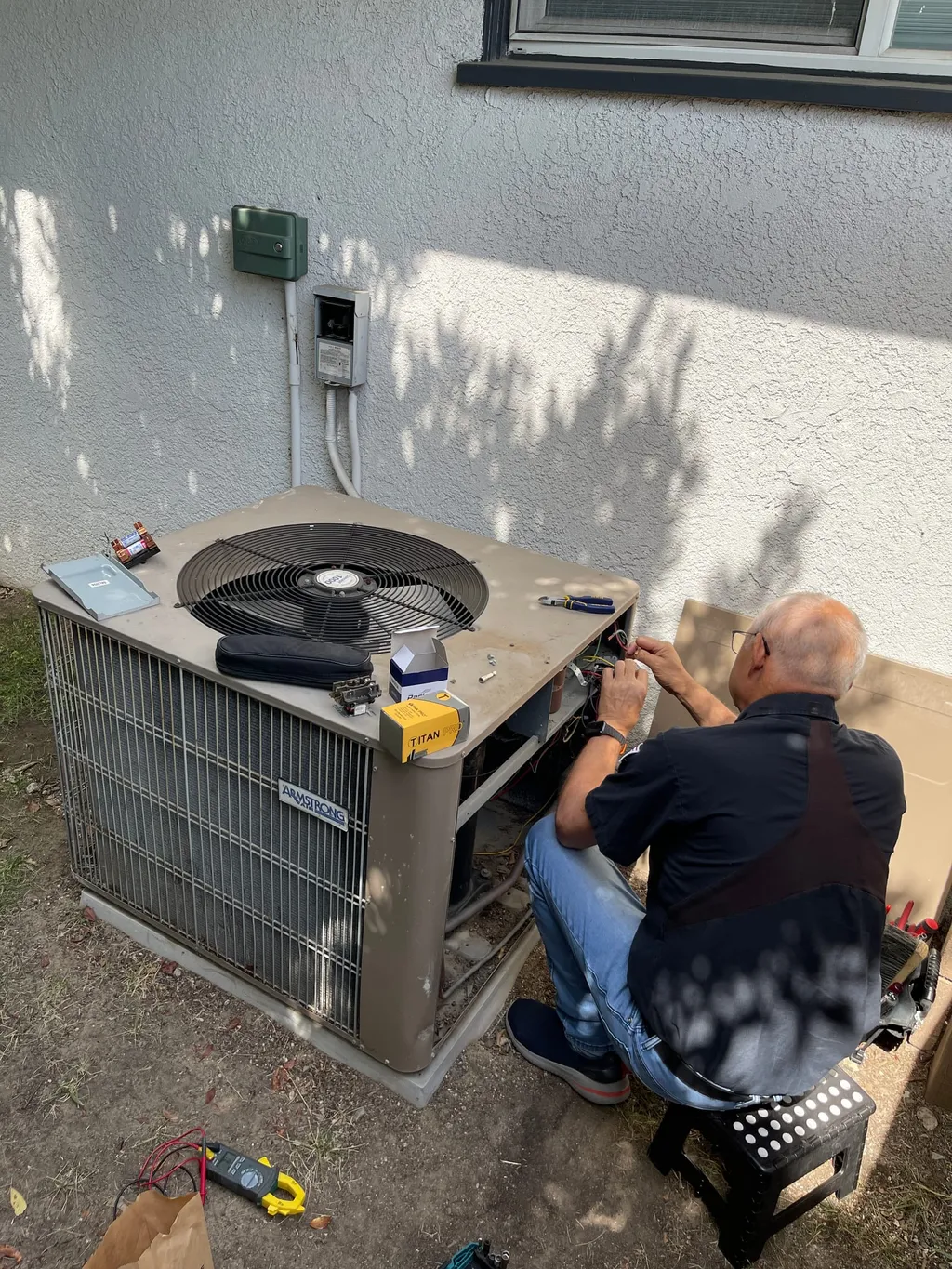
If your furnace isn’t heating on a cold morning, a few quick checks can save you a service call. Half of the “furnace not working” calls we run turn out to be one of three things the homeowner could have fixed in two minutes.
What to check first
Work through these in order:
- Thermostat: set to heat mode, set point above current temp. Batteries fresh if it’s battery-powered.
- Furnace switch: there’s usually a light-switch-style switch near the furnace itself. Sometimes flipped accidentally.
- Filter: a clogged filter trips a safety switch in many newer furnaces. Pull it out and check. If it’s been more than 90 days, replace it.
- Breaker: check the electrical panel. The furnace circuit might have tripped.
- Gas valve: confirm the gas valve at the furnace is in the on position (handle aligned with the pipe).
These five take five minutes total. If all are good and the furnace still won’t run, then it’s time to call.
What we’ll do on the call
When we show up for furnace repair, the diagnostic includes:
- Listen to your description, ask questions about timing and symptoms
- Pull the access panel and observe the ignition sequence
- Check the flame sensor for buildup (most common cause of intermittent failure)
- Inspect the ignitor for cracks or signs of failure
- Check the inducer motor for proper operation
- Combustion analysis if heat exchanger condition is suspect
- Pressure switch and limit switch readings
Most furnace repairs are flame sensor cleaning, ignitor replacement, or capacitor swap on the inducer motor. None of those are expensive parts. The labor and the diagnostic are the bulk of the visit. See more on furnace repair and what we cover.